

From Silicon Valley to Nuclear Alley: Why Big Tech Is Pouring Billions Into Atomic Energy
 adminSeptember 11, 20252 Mins read


By Farhan Ali • June 23, 2025
In the escalating AI arms race, tech giants are confronting a new kind of bottleneck—energy. Powering large language models, multimodal AI systems, and sprawling hyperscale data centers requires not only GPUs and data pipelines, but a reliable, continuous, and carbon-conscious energy source.
Enter nuclear power.
Once dismissed as politically fraught and economically inefficient, nuclear energy is experiencing a remarkable reputation reversal. And Big Tech is leading the charge—quietly buying power from aging reactors, lobbying for regulatory reform, and even investing in modular nuclear reactor startups to guarantee future supply.
Microsoft: Restarting Three Mile Island
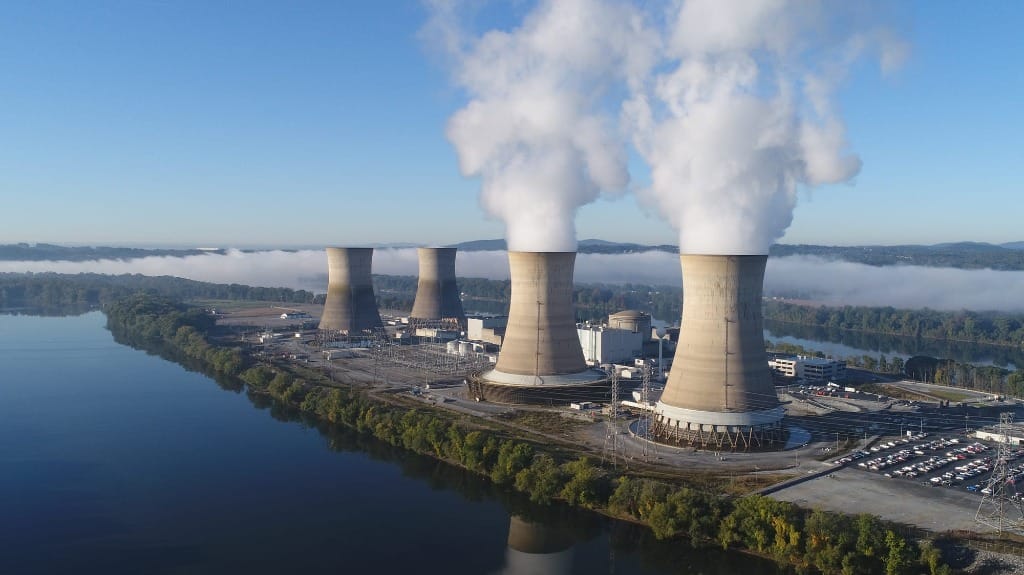
In perhaps the most headline-grabbing move, Microsoft has committed $1.6 billion to revive a shuttered nuclear facility in Pennsylvania—the infamous Three Mile Island plant. The project is in partnership with Constellation Energy and involves deploying AI-optimized energy scheduling and private microgrids to ensure uninterrupted power for Microsoft’s data center expansion in the Northeast.
Meta: Betting Big on Illinois
Meta Platforms is anchoring a long-term contract with Exelon to keep a major Illinois plant running through 2047. This comes as the company rapidly scales AI workloads across its Llama models and metaverse infrastructure. According to insiders, the deal includes provisions for small modular reactor (SMR) exploration on Meta-owned land.
Amazon: Owning the Ground Game
Amazon has tweaked a previously under-the-radar agreement to acquire 1.92 gigawatts of energy from a Pennsylvania facility—enough to power roughly 1.5 million homes. But more significantly, Amazon is developing proprietary on-site energy systems for its AWS data centers that include solar, battery, and nuclear elements.
Why Now?
- AI’s Energy Hunger: One GPT-4 level training run can consume as much electricity as 100 U.S. households do in a year.
- Grid Volatility: Spikes in energy demand are causing regional outages, leading tech firms to seek control of their energy input.
- Regulatory Shifts: Governments are now fast-tracking nuclear licensing to meet decarbonization goals.
- Price Predictability: Unlike natural gas, nuclear offers long-term price stability critical for forecasting cloud economics.
Critics & Caution
While some praise Big Tech for investing in clean baseload energy, others warn of corporate overreach into national infrastructure. There are also concerns about the environmental risks of legacy reactors and whether private companies will prioritize public safety in their nuclear ventures.
Moreover, climate advocates question whether AI—already criticized for its carbon footprint—is becoming just another energy-guzzling industry that outsources its emissions profile to “clean” PR narratives.
Conclusion
Tech’s nuclear pivot isn’t about nostalgia—it’s about necessity. As AI ambitions grow, so too must the grid behind them. With billions on the line and AI compute demand surging, the real winners in this next chapter may not be those with the best models—but those with the best power.
Additional References:
- TechCrunch Energy Desk (@techcrunch)
- Wired Energy (@wired)
- Reuters Power & Utilities (@reutersenergy)
- International Energy Agency (@ieaorg)
- Energy Intelligence (@energyintel)





New York Rises as Consumer Tech Hub as Gen Z Founders Redraw the Startup Map
By Farhan Ali • June 23, 2025 The center of gravity in...
adminSeptember 15, 2025

Big Tech Layoffs Accelerate in 2025 as Companies Double Down on AI Efficiency
By Farhan Ali • June 23, 2025 U.S. technology giants are cutting...
adminSeptember 14, 2025

Singularity Incoming? Experts Predict AI Could Surpass Human Intelligence by Early 2026
By Farhan Ali • June 23, 2025 According to a growing number...
adminSeptember 13, 2025

North Korean Phones Secretly Take Screenshots Every 5 Minutes—One of the Most Extreme Surveillance Systems Yet
By Farhan Ali• June 23, 2025 A newly revealed surveillance system from...
adminSeptember 13, 2025




Leave a comment